The Importance of being Honest.

So, I’m cycling through a pretty bad depression right now.  It started in the Fall, and it’s been hanging on a long while.  Hopefully, I’ll start to be back up again soon, but with bipolar, you can never tell.  And depression is a hard fight, because so much of it is out of our control.

Depression (and mania) aren’t ‘moods’…they are states.  And there’s a big difference there, one I wish was recognized more because calling ‘depression’ a MOOD disorder isn’t technically correct.

Moods are temporary feelings of whatever emotion is there:  happiness, sadness, grieving, gloomy, cheerful, energetic, and the list goes on.  And we all experience a huge range of moods!  We have happy days and sad days, but those days don’t last.  The SITUATION underlying the emotion (which causes the feelings that are ‘saturated’) doesn’t last, because for the most part, that’s what they are based on.  Getting a raise makes me feel happy.  Getting rejected makes me feel sad.  But, these moods pass as others take their place.  That’s why people will say to those who are sad:  “Cheer up…this will pass.”  And they are right!  It will pass.  Although I think saying “Cheer up” nullifies the person’s emotional mood and makes it appear to be insignificant, I get what they are saying.

But states are different creatures.  They aren’t place dependent.  People dependent.  Money dependent.  They are simply there.  And they are more than just the feeling that’s being projected.  For example, people who might be sad for a while may not experience anything else but that sadness.  Whereas people who are depressed also have trouble sleeping, have changes in eating, are restlessness or lethargic, have slowed thinking and memory issues, experience trouble making decisions, entertain thoughts of self-harm or suicide, and the list goes on.

The causes of depression are different too.  A major life event can trigger depression in someone, but there are underlying issues at work as well that go along with that stressor:  According to Harvard Medical “Certain areas of the brain help regulate mood.  Researchers believe that, more important then levels of specific brain chemicals, nerve cell connections, nerve cell growth, and the functioning of nerve circuits have a major impact on depression”.

So once again, like we see with so many mental illnesses, depression is in the brain.  Not in the situation.  That’s why for depression, meds are needed to regulate this brain chemistry and function, as well as counseling in order to learn better ways to cope with what is happening.

Last night, I was feeling extra down, and put on Facebook that I was really struggling with depression.  So many people reached out to me, and just knowing there is so much support and care out there really helps.  It doesn’t make me ‘less depressed’, but it does make me feel important and loved.  Anyone can use that anytime!

A couple years ago, I never would have posted anything like that because I was still trying to pretend my way through life, and hide the pain I often experience with bipolar.  But like I’ve said before, how can I expect to work against mental health stigma if I’m not genuine myself?  How hypocritical that would be!  When I was in Florida, I posted about how people on the beach were looking at the scars on my legs from when I cut myself.  Once again, if I can’t put issues out there that are related to mental illness, what am I preaching ‘lessen the stigma’ for?
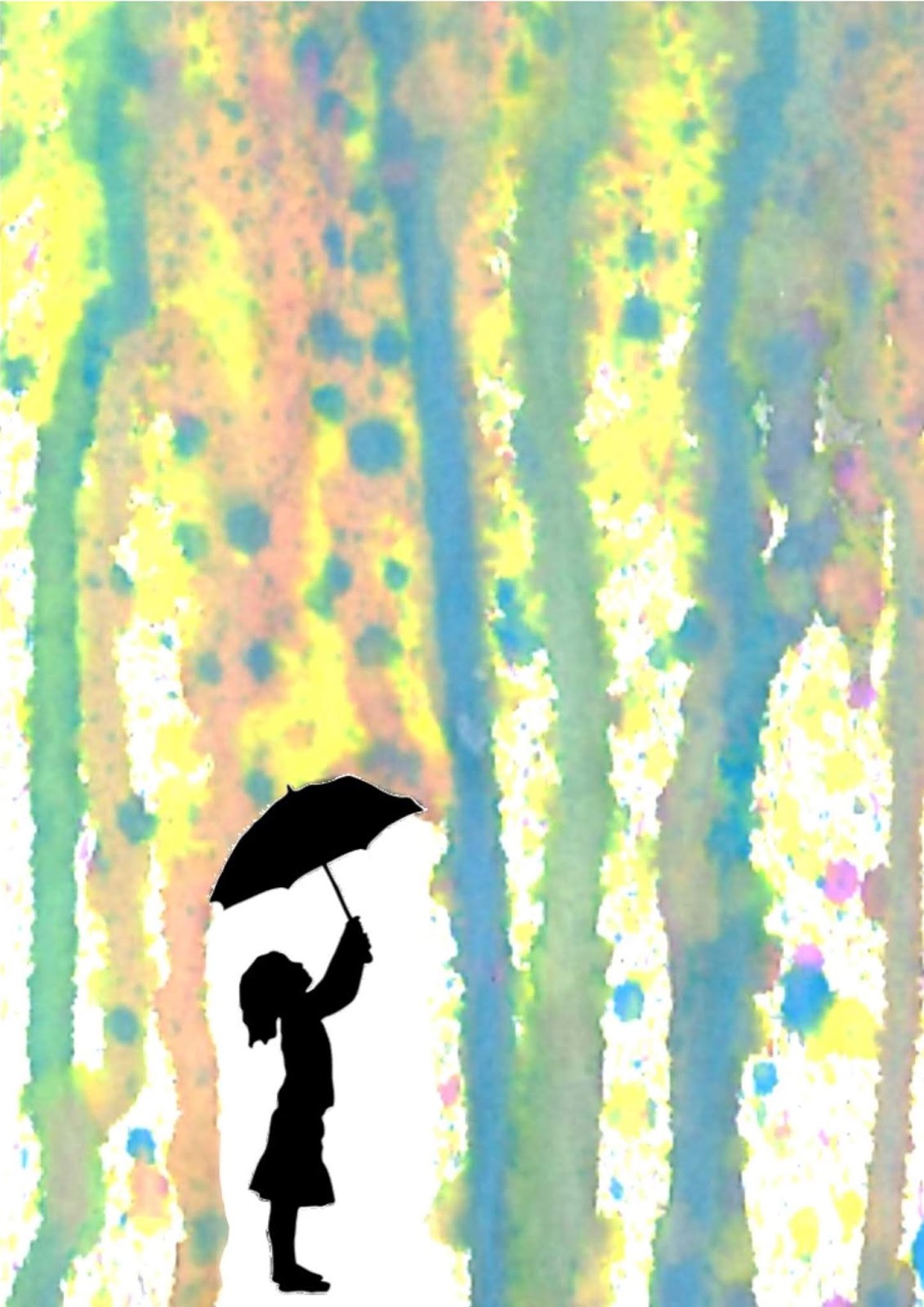
I bought this artwork, created by the Chariho Youth Task Force for their Mental Health Awareness Campaign.  Digital copies of this art can be purchased here for $5 and all proceeds go to mental health programs and information.

BUT, maybe there are people who think it’s OK to talk about depression.  That’s not ‘ugly’.  However, how can you even mention that you’ve cut?  That’s bloody and gross and scary.  Here’s the thing though, cutting does go along with my illness.  It just does.  I hate that I’ve done it.  I hate my scars.  I hate how people look at me when I’m at a pool or my shorts ride up a bit.  Even more though, I hate having an illness that has made my brain so confused at times, that cutting is the only outlet given for any type of psychological relief.  I know how hard that is to understand.  I don’t understand it.  But I know it’s a demon to fight when it rears it’s ugly head, and that at times, I’ve lost the battle.

This reminds me of my Human Sexuality class and what we were discussing the other day.  I was lecturing about development from pregnancy through birth, and when I got the part about what pregnant women often suffer, everyone was OK until I said the word “hemorrhoid!”  EVERYTHING  else was met with nods…but this??  Shouts of UGH and looks of horror!  WHY?  Because hemorrhoids are ‘icky’…nothing we really want to think about!
There are a lot of things about mental illness that are ‘icky’ too.  But we need to hear it all.  The way it really is.  That’s the only thing that will help people speak up and out about mental illness, and then get the support and help they need.

The mentally ill should not be living in a society where there is shame in having a disease/disorder/illness that’s out of their control.  We have the control to get help for it (if it’s available and affordable…2 BIG ifs), and learn better ways of coping with it.  But it’s always there.  Always.  Just like diabetics can be medicated appropriately and watch their diet.  Even if the diabetes is controlled though, it’s still there.  It’s a lifelong disease.  It’s not going to disappear.

The mentally ill don’t have diseases that will just disappear either.  And, the mentally ill won’t disappear, no matter how much we try to NOT talk about the issues that aren’t easy to face.  Don’t we all have the right for care, support, and understanding, regardless of where our disease or illness originates?  Don’t we all have the right to talk about our illnesses?  Our struggles?  Without stigma or shame? I believe we do.  And I’m going to keep doing it until everyone can do the same.

Kristi xoxo

A Personal Buffet :)

So, how do we know what we want in a mate?  It’s almost an unconscious thing, isn’t it?  Like going to a buffet where we look over the food and say, “Oooooooo…yum!”  or “Blech!”, without even really thinking about it.  Isn’t that true about people as well?  You can see someone and think, “Wow…OH YEAH!”  or say, “Uh, no!”  Either way, our choices are clear even if our reasoning behind them isn’t.

At counseling the other day, A (my therapist) asked me what I wanted in someone since working on relationships is one of our goals.  I didn’t have an easy or fast answer for her.  But I think it came to me last night.

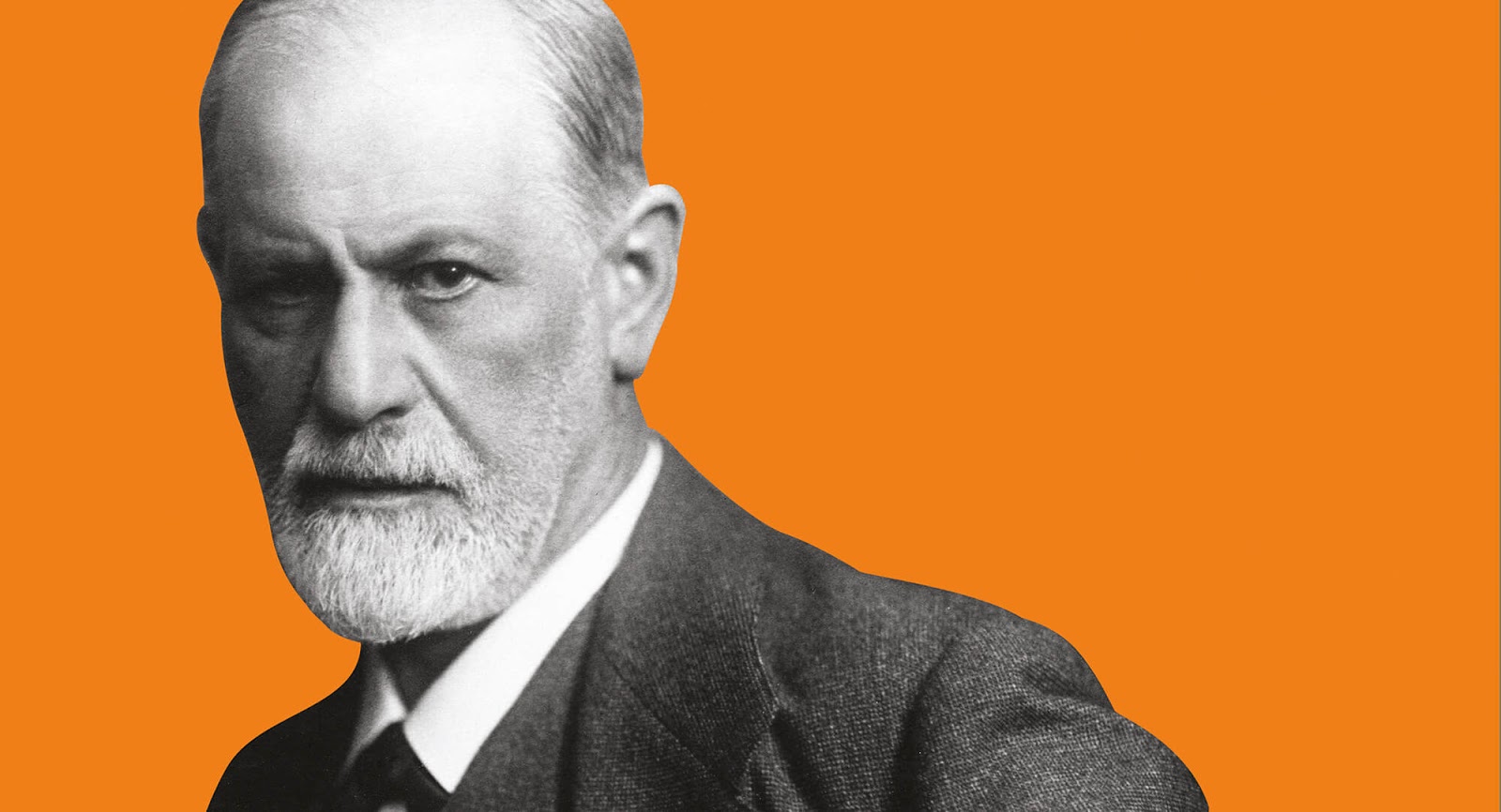
In my Marriage and Family classes, we talk about mate selection and see that there are many theories out there to try to explain how this works.  For example, Siggy talks about how we are more likely to choose a mate much like our opposite sexed parents (this was written in the Victorian era where heterosexual relationships were the only focus) in order to finally resolve the Oedipal and Electra complexes.  This is what kids experience around the ages of 3-6 or so, where they really want to possess their same sexed parent, while rejecting the other.  Obviously, this causes much family stress, and the kids start to emulate their same sexed parent so they can eventually, as adults, win a mate like the opposite sexed one.  PHEW!  Sounds crazy, right?  BUT…I have to say this:  research does show that we are more likely to marry someone more like our parents than not!  (This scares my son to death!)

There’s also the Ideal Mate Theory in which we create an image of what we want through early childhood experiences and then seek that person as an adult.  Maybe that’s why so many women want their prince to ride on their white horse and swoop them up!  And, maybe that’s also why when we meet the one we think is our mate, we say, “I think this is Mr. or Mrs. Right!”

Other theories exist too…like how we pick mates that complement what we need or lack.  Or ones that have just enough similarities that we have an instant connection that brings us together.

But these theories don’t take practical things into consideration, things I happen to think are pretty important.  Like, how many kids does this person want?  What’s their political stance?  Their criminal history?  How many times have they been divorced?  Is their extended family supportive?  Do they drink excessively or use drugs?  Do they follow your religion?  And the list goes on.

However, here’s another wrench with all of this:  you would think by now I have a type, and that couldn’t be further from the truth!  All 4 of my mates (3 hubbies and 1 partner) couldn’t have been anymore different from each other!  Hubby 1 was a metrosexual, well dressed, higher class guy, while Hubby 2 was nerdy and a very hard worker.  Hubby 3 was an Outlaw biker (literally) and my last partner was a younger veteran.  What a variety; perhaps I should practice polygamy to get everything I want??  🙂

So, when A talked to me about what I wanted, I knew it was more than what can be explained by the above, but I couldn’t put into words what ‘soul’ (for lack of a better word) I was looking for.  And then it hit me last night.  Simply stated, I want a man who is just as willing as I am to work and fight for the love we have.  That’s it.  Just one sentence.  But a very powerful one to me.

See, I used to think I was clingy.  And to a degree I might be.  But maybe that isn’t really what it is though, because I’ve always been financially independent and very capable of doing anything and everything that’s needed around the house, yard, etc.  I was the one my spouses would often turn too, instead of the other way around!  I was the rock.  The fixer.  The one who built back up whatever had been broken.

But when I was broken.  Or needed something fixed.  Or needed a rock, that’s when problems started.  The help wasn’t there.  The understanding.  The support.  While I was willing to invest everything into the relationship, they were willing to only invest a bit.  So, them pulling out of it didn’t ‘cost’ them as much as it cost me.

Maybe it’s because I’m “extra sensitive” (another wonderful trait of bipolar) that I simply can’t understand this.  How people can love you one day, and say the next that they don’t.  How you can spend years with someone, building them up, forgiving them for transgressions, supporting them through their pain, but when it’s about you, they turn their back.  And then, you’re the one that’s wrong.  Wrong for reaching out.  For trying.  Why do some people think relationships are easy?  And when there’s an issue, just drop them, because fixing it might be work?  Really?  Having problems means there’s no love?  No foundation?

I don’t think there’s any relationship that requires more work than that of a parent and child.  I remember when Oliver was a little guy…he’d wake me up in the middle of the night, and I’d have to force myself up on 2 hours of sleep after a 14 hour day.  When he was around 4, Oliver, who had asthma, got pneumonia.  And I did too.  But, I had to ignore mine and hold Oliver upright 24 hours a day for 4 days straight, giving him breathing treatments every 2 hours which the poor guy fought.  Just me, alone, because his dad had to work at his business.  It got to the point where I was so tired, I was in a hazy fog that enveloped me.  I didn’t know if I could keep going but then he started to get better and I could nap.  And all of this time, I kept thinking that if I didn’t do this, he could literally drown in his sleep.  Was that work?  OMG, yes!!  Did I begrudge him of it??  NO!!  Because that’s what parents do.  Period.

IMG_2903.JPG

Why can’t that same commitment be made in terms of mates?  Holding the person up.  Allowing them to breathe with your help.  Making sure they get through the next day?  Giving all that you have, and a little more, to make things better.I do that.  To a fault actually.  And I used to think it was wrong.  But is it?  Why is it wrong to be the one who won’t let go of the rope when they still believe there’s a danger of the other falling?  Why is it bad to say, “I forgive you.  Again.  Because I love you.  Still.”?  Someone once told me this was weak.  Really?  To me, it’s freaking strong.  Because like I did with Oliver, you have to dig down, find resources you don’t know you have, and use them to make sure what you love is preserved.

I guess I’m old fashioned, but I think maybe my way, instead of the way relationships are disposed of so easily in our society today, is actually the right one.Once, when I was a teenager,  I asked my Grandma what held her and Grandpa together.  They were the ONLY couple in my family that had never been divorced and I needed to know why.  After all, they were married just a short while before Grandpa served 3 years in the Navy during WWII.  I’ll never ever forget what my grandma said when I asked how they made it through all they did:  “Because we’re married.”  That’s it.  That was her answer.  And when you think about it, what more needs to be said?  They made a commitment.  They honored it.  They worked at it.  They invested in it.  Through everything.  Period.  Maybe I get my ideas about relationships from her.  And if so, I think that’s a very good thing.

Kristi xoxo

magicandbeauty

travels, books, cosmetics, promo, life

Niraj's blogs

Sharing my own experiences to help others

Come Home, Witch

Wise. Witchy. Wonderful.

Avisha Rasminda

Hi, I'm Avisha Rasminda Twenty-Two years old, Introduce Myself As A Author , Painter , A Poet.

quenchingthelongthirst

Transitioning to converting my thoughts into blogs than talking to myself about them

WHERE DO WE GO FROM HERE?

Thinking and Searching

Zaden Zane

RANDOM THINGS OF INTEREST

You Lil Dickens

Words To Think On

RTS -Mental health

Facing The Challenges of Mental Health

shelleypsych

AQA Psychology Linear course

Silent Songs of Sonsnow

"I have enough time to rest, but I don't have a minute to waste". Come and catch me with your wise words and we will have some fun with our words of wisdom.